
Article Plan: Tissue Worksheet PDF Answer Key (as of 04/21/2026)
Today’s date is 04/21/2026. This article details resources for tissue worksheet PDF answer keys‚ referencing Crash Course AP materials and specific tissue examples for comprehensive study.
Tissue worksheets‚ often in PDF format‚ are vital tools for anatomy and physiology students. They reinforce learning through identification‚ matching‚ and diagram labeling exercises‚ aiding comprehension.
What are Tissue Worksheets?
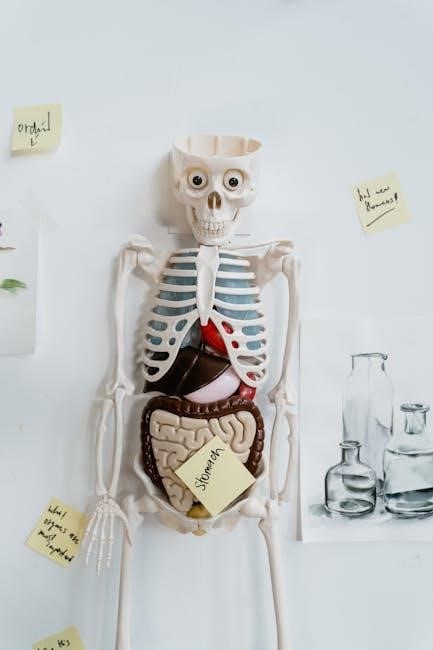
Tissue worksheets are educational resources designed to help students understand the four primary tissue types: epithelial‚ connective‚ muscle‚ and nervous. These worksheets commonly present students with diagrams of various tissues‚ requiring them to identify each type.
Furthermore‚ they often include matching exercises‚ linking tissue structures to their specific functions within the body. Questions assess understanding of characteristics‚ like epithelial surface exposure or connective tissue matrix composition. Completed worksheets‚ especially those in PDF format‚ serve as valuable study aids and assessment tools for instructors. They reinforce concepts learned in anatomy and physiology courses.
Purpose of Using Tissue Worksheet PDFs
Tissue worksheet PDFs offer several key benefits for both students and educators. PDFs ensure consistent formatting across devices‚ simplifying distribution and completion. They facilitate self-assessment‚ allowing students to check their understanding independently‚ particularly with readily available answer keys.
These digital documents are easily integrated into online learning platforms and are portable for convenient study. Moreover‚ PDFs support efficient grading for instructors. Resources like Crash Course AP worksheets‚ often provided as PDFs‚ enhance learning through video integration and timestamped answers‚ promoting deeper comprehension of complex tissue structures and functions.
Relevance to Anatomy and Physiology Courses
Tissue worksheet PDFs are fundamentally crucial within Anatomy and Physiology courses. These courses demand a detailed understanding of the four primary tissue types – epithelial‚ connective‚ muscle‚ and nervous – and their roles within organ systems. Worksheets reinforce identification skills‚ functional correlations‚ and structural nuances.
Utilizing resources like Crash Course AP materials‚ often available as PDF-based worksheets‚ bridges theoretical knowledge with practical application. Accurate answer keys are vital for self-study and exam preparation. Mastering tissue identification is foundational for comprehending organ anatomy and physiological processes‚ making these PDFs indispensable learning tools.

Types of Tissues Covered in Worksheets
Worksheets commonly focus on epithelial‚ connective‚ muscle‚ and nervous tissues. Specific examples include squamous‚ cuboidal‚ cardiac‚ fibrous‚ skeletal‚ adipose‚ and stratified tissues for detailed study.
Epithelial Tissue
Epithelial tissue worksheets frequently assess understanding of surface characteristics – apical and basal surfaces – and classifications based on cell shape (squamous‚ cuboidal‚ columnar) and layering (simple‚ stratified).
Questions often involve identifying these types‚ like simple squamous epithelium‚ and relating their structure to function‚ such as diffusion in the lungs. Worksheets may also explore specialized epithelial features like cilia or microvilli.
Understanding the role of epithelial tissues as coverings and linings‚ and their avascular nature‚ is crucial. Crash Course resources can supplement learning‚ with answer keys often referencing specific video timestamps for clarification.
Connective Tissue
Connective tissue worksheets heavily emphasize the extracellular matrix – ground substance and fibers – and its composition in different types. Students are asked to differentiate between various connective tissues like dense fibrous connective tissue‚ adipose tissue‚ and hyaline cartilage.
Key questions focus on the functions of each tissue type‚ relating structure to roles in support‚ protection‚ and binding. Identifying cell types within the matrix (fibroblasts‚ chondrocytes‚ osteocytes) is also common.
Worksheet answer keys should accurately reflect matrix characteristics and tissue-specific functions.
Muscle Tissue
Muscle tissue worksheets concentrate on differentiating skeletal muscle‚ smooth muscle‚ and cardiac muscle. Questions frequently assess understanding of their structural differences – striations‚ nuclei per cell – and how these relate to function.
A core component involves explaining the mechanism of muscle tissue contraction‚ often requiring students to detail the roles of actin and myosin. Worksheets may also ask about voluntary versus involuntary control.
Reliable answer keys must accurately depict microscopic features and clearly explain contraction processes.
Nervous Tissue
Nervous tissue worksheets emphasize neuron structure – dendrites‚ cell body‚ axon – and glial cell functions. Questions often probe understanding of how structure facilitates signal transmission.
A key focus is relating neuron anatomy to its role in the body‚ specifically how the structure supports rapid communication. Worksheets may include labeling diagrams of neurons and synapses.
Answer keys should accurately depict these structures and clearly explain the relationship between neuron components and their function in transmitting electrical signals throughout the body.

Key Components of a Tissue Worksheet
Worksheets commonly feature tissue identification‚ function matching‚ and diagram labeling. Answer keys must accurately reflect these elements for effective student learning and assessment.
Identification of Tissue Types
A crucial component of any effective tissue worksheet is the accurate identification of various tissue types. Students are often presented with images – microscopic views of tissues – and tasked with correctly naming them.
Examples from resources include identifying simple squamous epithelium‚ simple cuboidal epithelium‚ cardiac muscle‚ dense fibrous connective tissue‚ skeletal muscle‚ nervous tissue‚ hyaline cartilage‚ smooth muscle‚ adipose tissue‚ stratified squamous epithelium‚ and areolar connective tissue.
The answer key must precisely match these identifications‚ providing clarity and reinforcing correct histological recognition. Incorrect identification hinders understanding of tissue function and overall anatomy.
Matching Tissue to Function
Worksheets frequently assess a student’s ability to correlate tissue structure with its specific function within the body. This requires understanding how a tissue’s unique characteristics – cellular arrangement‚ matrix composition‚ and specialized features – enable it to perform a particular role.
For instance‚ the answer key should demonstrate how the flattened cells of simple squamous epithelium facilitate diffusion‚ or how the contractile fibers in muscle tissue enable movement.
Accurate matching is vital; a reliable answer key provides the correct functional link for each tissue type‚ solidifying comprehension beyond mere identification.
Labeling Diagrams of Tissue Structures
A crucial component of tissue worksheets involves accurately labeling diagrams depicting histological features. The answer key must precisely identify structures like cell nuclei‚ cytoplasm‚ matrix components‚ and specialized junctions within each tissue type.
For example‚ in connective tissue‚ labeling collagen and elastic fibers is essential. In nervous tissue‚ identifying neurons‚ glial cells‚ and synapses is key.
A comprehensive answer key will not only provide labels but also briefly explain the function of each labeled structure‚ reinforcing understanding of the tissue’s overall organization and purpose.

Common Questions on Tissue Worksheets
Worksheets frequently assess epithelial characteristics‚ connective tissue matrix composition‚ muscle contraction mechanisms‚ and neuron structure/function‚ requiring detailed answers verified by a reliable key.
Questions on Epithelial Tissue Characteristics
Epithelial tissue questions commonly focus on surface exposure – apical versus basal surfaces – and their relevance to function. Worksheets often ask students to identify tissue types (simple squamous‚ cuboidal‚ stratified squamous) based on structure and location.
Key inquiries involve understanding how cell shape (squamous‚ cuboidal‚ columnar) relates to specific roles like diffusion‚ secretion‚ or protection. Students are frequently prompted to explain the importance of tight junctions‚ adherens junctions‚ desmosomes‚ and gap junctions in maintaining epithelial integrity and facilitating intercellular communication.

Answering these requires a solid grasp of epithelial tissue’s defining characteristics and its diverse functions within the body.
Questions on Connective Tissue Matrix
Connective tissue worksheets heavily emphasize the extracellular matrix. Key questions explore the composition of the matrix – ground substance and fibers (collagen‚ elastic‚ reticular) – and how it varies between tissue types.
Students are often asked to differentiate between different connective tissues (areolar‚ dense fibrous‚ cartilage‚ bone‚ adipose) based on their matrix components. Understanding the role of fibroblasts‚ chondrocytes‚ and osteocytes in matrix production and maintenance is crucial.
Worksheets also probe the functions of the matrix‚ such as support‚ protection‚ and binding.
Questions on Muscle Tissue Contraction
Muscle tissue worksheets frequently assess understanding of contraction mechanisms. Key questions focus on the sliding filament theory‚ requiring students to detail the roles of actin‚ myosin‚ and calcium ions.
Distinguishing between skeletal‚ smooth‚ and cardiac muscle contraction is vital; worksheets often present scenarios requiring identification of the muscle type based on contraction speed and control (voluntary vs. involuntary).
Questions explore energy sources for contraction (ATP) and the impact of fatigue. Understanding neuromuscular junctions and motor unit recruitment is also commonly tested.
Questions on Neuron Structure and Function
Nervous tissue worksheets heavily emphasize neuron anatomy and physiology. Key questions probe the functions of dendrites‚ axons‚ and the cell body‚ alongside identifying supporting glial cells.
Worksheets assess understanding of action potential generation and propagation‚ including the roles of sodium and potassium channels. Synaptic transmission – neurotransmitter release and receptor binding – is a frequent topic.
Students are often asked to describe how neuron structure relates to its function‚ like myelination speeding up signal transmission. Questions may also cover the central and peripheral nervous systems.

Answer Key Considerations
Accurate answer keys are vital for self-assessment. Reliable sources‚ like instructor-provided keys or verified online resources‚ are essential for effective learning.
Importance of Accurate Answer Keys
Precise answer keys are fundamentally crucial for students utilizing tissue worksheet PDFs. They facilitate independent learning and provide a benchmark for understanding complex histological concepts. Self-assessment becomes meaningful only with reliable answers‚ allowing learners to pinpoint knowledge gaps and focus study efforts effectively.
Inaccurate keys can reinforce misconceptions‚ hindering progress in anatomy and physiology. Furthermore‚ detailed answer keys‚ especially those incorporating video timestamps (like Crash Course resources)‚ enhance comprehension. They connect visual learning with worksheet application‚ solidifying understanding of tissue structures and functions. A well-constructed key isn’t just answers; it’s a learning tool.
Where to Find Reliable Answer Keys
Locating trustworthy answer keys requires discerning sources. Teacher-provided keys are often the most accurate‚ but may not always be readily available. Educational platforms like Studocu host user-submitted resources‚ including worksheet keys – exercise caution and cross-reference information.
Crash Course AP resources‚ specifically accompanying worksheets (like Ms. Dugger’s)‚ frequently include answer keys with video timestamps‚ offering a strong foundation. Additionally‚ publishers of anatomy and physiology textbooks often provide instructor manuals with answer keys. Always prioritize keys aligned with the specific worksheet version used.
Understanding Variations in Answer Key Formats
Answer key presentation varies significantly. Some keys provide direct answers‚ while others offer detailed explanations or justifications. Crash Course worksheets utilize video timestamps alongside answers‚ aiding in locating supporting information within the lecture.
Diagram labeling keys may present answers as lists‚ or directly on an image. Multiple-choice keys can be simple letter selections or include rationales. Be prepared to interpret answers – a key might accept synonymous terms. Recognizing these format differences ensures accurate self-assessment and a deeper understanding of the tissue concepts.

Specific Tissue Examples & Worksheet Focus
Worksheets commonly focus on tissues like simple squamous‚ cardiac muscle‚ and nervous tissue‚ often requiring identification‚ function matching‚ and diagram labeling for effective learning.
Simple Squamous Epithelium
Worksheets frequently assess understanding of simple squamous epithelium’s structure and function. Students identify it under a microscope‚ noting its flattened cell shape and single layer. Questions explore its role in diffusion and filtration‚ found in air sacs of lungs and blood vessel linings.
Answer keys emphasize recognizing its thinness facilitating rapid transport. Worksheets may include labeling diagrams of alveoli or capillaries. Crash Course AP resources often highlight this tissue’s efficiency. Correct answers demonstrate comprehension of structure-function relationships‚ crucial for histology mastery. Identifying it correctly is a foundational skill.
Simple Cuboidal Epithelium
Tissue worksheet answer keys often feature questions about simple cuboidal epithelium’s location and function; Students must identify its cube-shaped cells and single layer. Common questions assess its role in secretion and absorption‚ found in kidney tubules and gland ducts.
Reliable keys highlight its larger nuclei compared to squamous cells. Diagrams require labeling of cell parts and identifying its function in specific organs. Crash Course AP materials reinforce its importance in glandular tissue. Accurate answers demonstrate understanding of how its structure supports its secretory and absorptive roles.
Cardiac Muscle Tissue
Tissue worksheet PDF answer keys frequently test knowledge of cardiac muscle’s unique structure and involuntary control. Students must differentiate it from skeletal muscle‚ noting its striations‚ intercalated discs‚ and single nucleus per cell.
Keys emphasize its function in rhythmic heart contractions. Questions often involve identifying locations within the heart and explaining how intercalated discs facilitate rapid electrical signal transmission. Crash Course AP resources aid in understanding its specialized physiology. Correct answers demonstrate comprehension of its vital role in the circulatory system and its distinct cellular features.
Dense Fibrous Connective Tissue
Tissue worksheet PDF answer keys commonly assess understanding of dense fibrous connective tissue’s strength and structure. Students must identify its densely packed collagen fibers and limited ground substance‚ differentiating it from other connective tissues.
Keys focus on its role in forming tendons‚ ligaments‚ and the dermis. Questions often involve relating its structure to its function – resisting tension and providing support. Crash Course AP resources help visualize its organization. Accurate answers demonstrate knowledge of its composition and its importance in connecting structures throughout the body‚ ensuring stability and movement.
Skeletal Muscle Tissue
Tissue worksheet PDF answer keys frequently test knowledge of skeletal muscle’s striated appearance and voluntary control. Students must identify features like multinucleated muscle fibers and understand their arrangement within fascicles.
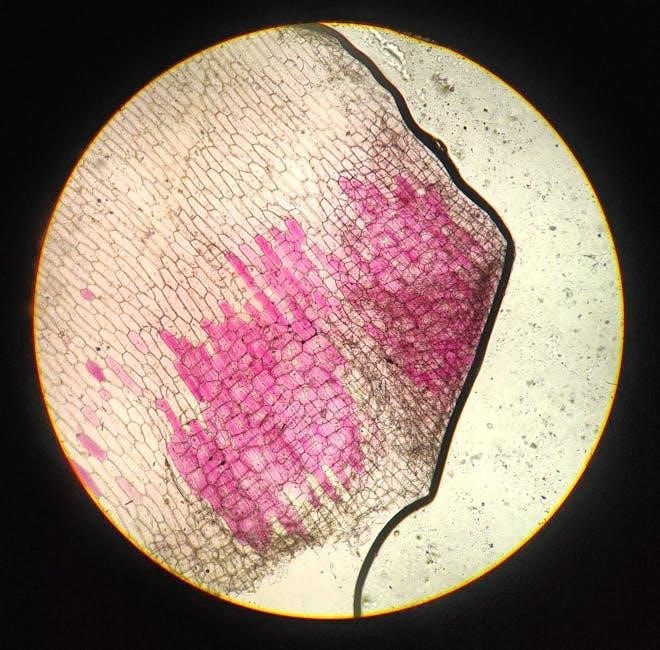
Keys emphasize the connection between structure and function – how the arrangement of sarcomeres enables contraction. Questions often assess understanding of the sliding filament model and the role of calcium ions. Crash Course AP videos provide visual aids for understanding muscle fiber anatomy. Correct answers demonstrate comprehension of how skeletal muscle facilitates movement and maintains posture.
Tissue worksheet PDF answer keys assessing nervous tissue focus on neuron structure – dendrites‚ cell body‚ axon – and glial cell functions. Students must correlate structure with the transmission of electrical signals.
Keys often include questions about neuron types (sensory‚ motor‚ interneurons) and synaptic transmission. A key component is understanding how neuron structure relates to its function in the body‚ as highlighted in provided resources. Crash Course AP materials aid in visualizing these complex structures. Accurate answers demonstrate comprehension of the nervous system’s role in communication and control.
Hyaline Cartilage
Tissue worksheet PDF answer keys pertaining to hyaline cartilage emphasize its composition – chondrocytes within a matrix – and its locations‚ like articular surfaces and the nose.
Worksheet questions often assess its function in providing smooth surfaces for joint movement and support. Answer keys should accurately identify hyaline cartilage in diagrams and explain its avascular nature. Resources like anatomy coloring workbooks‚ as referenced‚ are crucial for visual identification. Correct answers demonstrate understanding of its role in skeletal structure and reducing friction within joints‚ vital for mobility.
Smooth Muscle Tissue
Tissue worksheet PDF answer keys focusing on smooth muscle require students to differentiate it from skeletal and cardiac muscle‚ noting its involuntary control and lack of striations.
Worksheet questions commonly explore its location in organ walls (like the digestive tract) and blood vessels‚ linking structure to function. Answer keys must accurately depict its spindle shape and single nucleus. Crash Course resources‚ with timestamped answers‚ aid in understanding its role in peristalsis and vasoconstriction. Correct responses demonstrate comprehension of how smooth muscle contributes to vital bodily processes without conscious effort.
Adipose Tissue
Tissue worksheet PDF answer keys assessing adipose tissue emphasize its role in energy storage‚ insulation‚ and cushioning. Questions often require identifying its characteristic large‚ empty cells and minimal extracellular matrix.
Reliable answer keys will highlight the difference between white and brown adipose tissue‚ and their respective functions. Crash Course materials can be integrated‚ utilizing video timestamps to pinpoint explanations of lipid droplet accumulation. Students should demonstrate understanding of how adipose tissue impacts metabolic processes and overall body homeostasis. Accurate identification and functional understanding are key assessment points.
Stratified Squamous Epithelium
Tissue worksheet PDF answer keys focusing on stratified squamous epithelium prioritize identifying its multiple cell layers and protective function. Questions commonly assess its location in areas subject to abrasion‚ like skin and the lining of the mouth.
Accurate answer keys will differentiate between keratinized and non-keratinized varieties‚ linking structure to specific locations and functions. Crash Course integration can utilize timestamps to reinforce understanding of its regenerative capabilities. Students must demonstrate comprehension of how its layered structure provides robust defense against damage and dehydration‚ a crucial concept for histology mastery.
Areolar Connective Tissue
Tissue worksheet PDF answer keys regarding areolar connective tissue emphasize recognizing its diverse cell types – fibroblasts‚ macrophages‚ and mast cells – within a loosely organized matrix. Questions often focus on its widespread distribution and multiple functions‚ including support‚ binding‚ and cushioning.
Reliable answer keys will highlight the presence of collagen‚ elastic‚ and reticular fibers‚ correlating fiber composition with specific roles. Crash Course resources can be integrated by pinpointing video segments explaining its role in inflammation and wound healing. Understanding its fluid-holding capacity is key to grasping its function.

Utilizing Crash Course AP Resources
Crash Course AP videos‚ like “Tissues‚ Part 2‚” offer excellent supplemental material for tissue worksheet PDF answer keys‚ with timestamped questions for focused review.
Crash Course Tissues‚ Part 2 Worksheet Integration
Integrating the Crash Course Tissues‚ Part 2 video with a dedicated worksheet significantly enhances learning and comprehension of histological concepts. Ms. Dugger’s worksheet‚ designed to accompany the video‚ features 23 questions spanning epithelial tissues.
A key benefit is the inclusion of answer keys with precise video timestamps. This allows students to quickly locate and revisit specific segments explaining each answer. This method promotes active learning‚ encouraging students to pause‚ reflect‚ and verify their understanding. The worksheet’s structure facilitates a deeper engagement with the material‚ moving beyond passive viewing to active recall and application.
Utilizing Video Timestamps in Answer Keys
Incorporating video timestamps into tissue worksheet PDF answer keys is a powerful pedagogical tool. These timestamps‚ as seen in Ms. Dugger’s Crash Course Tissues‚ Part 2 worksheet‚ directly link correct answers to specific moments within the educational video.
This feature allows students to instantly revisit the explanation for any question they answer incorrectly‚ fostering independent learning and targeted review. It transforms the answer key from a simple correctness check into a dynamic learning resource‚ promoting deeper understanding and retention of complex histological concepts. This method maximizes the video’s educational value.
Supplemental Questions for Deeper Understanding
Beyond basic identification and matching‚ tissue worksheet PDF answer keys should inspire critical thinking. Supplemental questions can probe students’ understanding of structure-function relationships‚ challenging them to apply knowledge.
For example‚ asking students to describe how a neuron’s structure facilitates its function – as highlighted in provided resources – encourages analytical skills. These questions should move beyond rote memorization‚ prompting students to explain why tissues are structured as they are and how these structures contribute to overall physiological processes. This fosters a more robust comprehension.