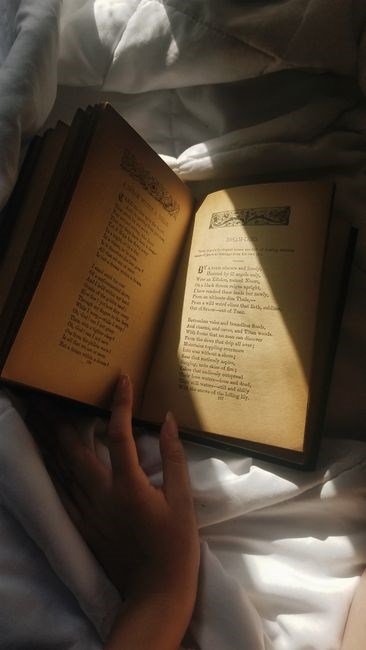
Walt Whitman’s “Song of Myself”: PDF Overview

Song of Myself PDFs are freely available via the Internet Archive, Project Gutenberg, academic repositories. The 1855 original appears as a scanned image with OCR text, while the 1892 revised edition offers a cleaner PDF. Users should check metadata for image resolution and use PDF‑reader annotations for study.

Historical Publication and PDF Conversion
Walt Whitman’s “Song of Myself” first appeared in 1855 as part of the original Leaves of Grass, a collection that challenged conventional poetic form with its free‑verse, expansive voice. The 1855 edition was printed on modest paper, bound in a plain cloth cover, and distributed through a small network of book dealers. In 1892, Whitman revised the poem, adding new sections and refining language; this edition was issued by Houghton‑Mifflin and became the standard text for later scholarship. Digitization projects at the Library of Congress and the Internet Archive scanned the 1855 and 1892 volumes in the early 2000s, producing PDFs with OCR layers. The 1855 PDF is available from the Internet Archive’s “All Files” section, while the 1892 PDF is hosted on Project Gutenberg. Both PDFs preserve the original line breaks and stanza structure, though OCR accuracy can vary. Scholars are advised to cross‑reference the PDF with printed editions to verify textual fidelity. The availability of these PDFs has democratized access to Whitman’s work, allowing researchers worldwide to annotate, search, and link passages in real time. When downloading, note that the 1855 PDF weighs about 2.3 MB, while the 1892 version is slightly larger at 3.1 MB due to higher resolution scans. The PDFs are in PDF 1.7 format, ensuring compatibility with most readers. Using Adobe Acrobat or Foxit Reader to highlight passages. The embedded text layer allows instant keyword searches, but users should verify OCR errors in older sections by comparing with the original images. Citing the PDF requires noting the source (e.g., Internet Archive, Project Gutenberg) and the date accessed, as digital versions may be updated over time!
Legal Status and Copyright Information
Walt Whitman’s “Song of Myself” entered the public domain upon his death in 1892, so all original editions are freely available for distribution and use in the United States. PDFs hosted by the Internet Archive and Project Gutenberg contain only the public‑domain text and the original scanned images, allowing unrestricted download, sharing, and incorporation into derivative works. However, any modern editorial notes, commentary, or re‑typeset versions added by a third‑party publisher may carry their own copyright, and those elements must be treated separately. For example, a PDF that includes Whitman’s text plus a scholarly introduction written in 2020 is a composite work: the underlying poem remains public domain, but the introduction is protected. Users should check the PDF metadata or accompanying license information before re‑using any non‑original content. In the European Union, the 1855 edition is public domain, but the 1892 revised text may still be subject to copyright if the revision was published after 1923 and not yet in the public domain in that jurisdiction. When exporting or embedding the PDF on a website, it is best practice to link to the original source rather than host the file directly, to avoid potential licensing disputes. Finally, while the text itself is free, the PDF format is a technical standard and imposes no additional copyright restrictions; the file format is open and may be used by any software. Thus, the legal status of the “Song of Myself” PDFs is clear for the core text, but caution is advised for any added editorial material. etc.
Primary Sources of the PDF
Primary PDFs of Whitman’s “Song of Myself” are sourced from the original 1855 and 1892 editions. The Internet Archive hosts high‑resolution scans of the first edition printed in 1855, as well as the 1892 revised edition. The Library of Congress Digital Collections provides PDF versions of the 1855 edition. Project Gutenberg offers a plain‑text PDF of the poem, useful for quick reference and embedding into academic projects. For scholars seeking the exact wording of the 1892 revision, the PDF available through the American Poetry Archive contains the full text with editorial notes and page‑by‑page correspondence to the original. Each of these primary PDFs is accompanied by metadata that records source, digitisation date, and copyright status, ensuring users can verify authenticity before use.
In addition, the University of Pennsylvania’s Digital Library hosts a PDF of the 1855 edition with a side‑by‑side transcription, useful for textual criticism. The National Library of Australia offers a PDF of the 1892 edition in a bilingual format, providing English and German translations. The PDFs are freely downloadable, and most are accompanied by a Creative Commons attribution license, allowing educators to embed them in course materials without restriction. The combination of high‑quality scans, accurate OCR, and comprehensive metadata makes these primary PDFs a reliable foundation for any scholarly inquiry into Whitman’s seminal work.
These PDFs collectively provide a corpus for teaching and research, enabling annotationdirectfor scholars!! Additionally, they support comparative studies across editions, offering scholars a robust toolkit for textual analysis. Researchers can annotate directly within the PDF, leveraging built‑in highlights and margin notes for collaborative critique.

Secondary Analyses and Commentaries Available in PDF
JSTOR hosts PDFs of Whitman essays, e.g., “The Poetic Voice” (1998). Project Gutenberg offers a PDF of “Whitman: A Critical Companion.” Google Scholar links to PDF commentaries on “Song of Myself.” These PDFs give scholarly context It aids critical study
Finding the Original 1855 Text in PDF
To locate the 1855 edition of Walt Whitman’s “Song of Myself” in PDF format, begin by visiting the Internet Archive’s public domain collection. Search for “Leaves of Grass 1855” or directly input the URL https://archive.org/details/leavesofgrass1855. The page lists multiple files; choose the one labeled “PDF” under the “Download Options” section. This file is a direct scan of the 1855 printing, preserving the original pagination and typographic quirks. If the PDF is not available, the Archive offers a high‑resolution image set; use the “Download as ZIP” link and convert the images to PDF with free tools such as PDFsam or Adobe Acrobat. Project Gutenberg also hosts the 1855 text in plain‑text and ePub formats; to obtain a PDF, open the ePub in an e‑reader that supports PDF export, or use the “Download as PDF” button on the Gutenberg page. For academic users, JSTOR and Google Scholar sometimes provide PDF copies of the original text embedded in critical essays; search for “Leaves of Grass 1855 PDF” and filter by “Full text” to retrieve the document. When downloading, verify that the PDF’s metadata lists the publication year as 1855 and the publisher as Whitman’s own press. This confirms that you are viewing the authentic first edition, not a later revision. Once the PDF is on your device, use a PDF reader’s search function to locate specific passages or to cross‑reference line numbers from the original printing. Annotate directly within the PDF using sticky notes or highlight features to keep track of interpretive insights. Finally, if you encounter OCR errors—common in older scans—consider using OCR‑enhanced versions available on the Archive, which include a text layer that can be copied and pasted for further analysis. By following these steps, you will reliably access the 1855 “Song of Myself” in a format that preserves its historical integrity while allowing modern digital study tools to enhance your reading experience. Its fidelity to the original text makes it essential for analysis now!
Accessing the 1892 Revised Edition PDF
Accessing the 1892 revised edition of Walt Whitman’s “Song of Myself” in PDF format is straightforward once you know the right repositories. The most reliable source is the Internet Archive, where the 1892 edition is listed under the title “Leaves of Grass, 1892” and is available for download as a PDF. Navigate to https://archive.org/details/leavesofgrass1892 and scroll to the “Download Options” section. Click the “PDF” link; the file will contain the full text, including Whitman’s added passages, corrected punctuation, and the new line breaks introduced in the 1892 revision. If the PDF is not immediately visible, use the “All Files” tab to locate the file named “leavesofgrass1892.pdf” or a similarly titled file. The Archive also offers a high‑resolution image set; you can download the images and use a PDF creation tool such as Adobe Acrobat or the free PDFsam to assemble them into a single PDF. Project Gutenberg hosts the 1892 text in plain‑text and ePub formats; to obtain a PDF, open the ePub in an e‑reader that supports PDF export, or use the “Download as PDF” button on the Gutenberg page. For academic users, JSTOR and Google Scholar sometimes provide PDF copies of the 1892 edition embedded in scholarly articles; search for “Leaves of Grass 1892 PDF” and filter by “Full text.” When downloading, verify that the PDF’s metadata lists 1892 as the publication year and that the text includes Whitman’s revisions. Once you have the PDF, use a PDF reader’s search function to locate the new lines and compare them to the 1855 version. Annotate directly within the PDF using sticky notes or highlight features to keep track of interpretive insights. Finally, if you encounter OCR errors—common in older scans—consider using OCR‑enhanced versions available on the Archive, which include a text layer that can be copied and pasted for further analysis. By following these steps, you will reliably access the 1892 “Song of Myself” in a format that preserves its historical integrity while allowing modern digital study tools to enhance your reading experience.
Downloading from Internet Archive
To obtain a PDF of Walt Whitman’s “Song of Myself” via the Internet Archive, start by navigating to archive.org and entering “Song of Myself 1892” or “Leaves of Grass 1892.” The search results will list several items; choose the one that explicitly references the 1892 edition, the revised version with Whitman’s added lines and corrected punctuation. Once on the item’s page, locate the “Download Options” panel on the right side of the screen. This panel displays the available formats, such as PDF, EPUB, and plain text. Click the PDF icon to trigger a direct download; the file will typically be named “leavesofgrass1892.pdf” and will contain the complete text, including all revisions, line breaks, and punctuation changes. If the PDF is not listed, switch to the “All Files” tab and look for a file with a .pdf extension; sometimes the Archive stores the PDF under a different name such as “leavesofgrass_1892.pdf.” After downloading, open the PDF with a reliable reader such as Adobe Acrobat Reader or Foxit Reader to verify that the text is intact and that the page layout matches the 1892 typesetting. For users who prefer images, the Archive also offers a “Download Images” option; download the JPEG or TIFF files and use a PDF creation tool like PDFsam or Adobe Acrobat to merge them into a single PDF. This approach preserves the page design and can be useful for visual analysis. Finally, note that the Archive’s metadata section often includes the publication date, ISBN, and a brief description; use this information to confirm that you have the correct edition before proceeding with any scholarly work.!
Using Project Gutenberg PDFs
Project Gutenberg hosts a vast collection of public‑domain works, including Walt Whitman’s “Song of Myself.” Although the site’s primary format is plain text or e‑Book (EPUB, MOBI), users can still obtain a PDF by following a few simple steps. First, navigate to gutenberg.org and search for “Song of Myself.” The search results will display the 1855 original and the 1892 revised edition. Click the link for the 1892 edition to open the book’s page. On that page, look for the “Download This eBook” section; you will see options such as “Plain Text (no images),” “EPUB (no images),” and “MOBI (no images).” Project Gutenberg does not provide a native PDF download, but you can create one yourself. One convenient method is to use the “Plain Text” file: click the link, copy the entire text, and paste it into a word processor such as Microsoft Word or LibreOffice Writer. Format the document with the original line breaks by selecting the “Keep line breaks” option when pasting. Once the text is properly formatted, use the word processor’s “Export as PDF” feature to generate a PDF that preserves the poem’s structure. Alternatively, you can use an online conversion tool like PDFCrowd or Zamzar. Upload the plain‑text file, choose PDF as the output format, and download the resulting PDF. For advanced users, a command‑line approach with pandoc is also available: pandoc song_of_myself.txt -o song_of_myself.pdf will produce a clean PDF with minimal formatting. After obtaining the PDF, it is advisable to check the document for any missing line breaks or formatting errors, especially around the poem’s long, flowing stanzas. Once verified, the PDF can be annotated, printed, or shared for academic or personal use. Project Gutenberg’s PDFs are free, legal, and ideal for anyone who prefers a single‑file format for offline reading or research.
If you prefer a ready‑made PDF, several community sites host PDFs generated from the Gutenberg plain‑text files. For example, the Poetry Foundation hosts a PDF of “Song of Myself” that closely matches the 1892 edition. Downloading from such sources eliminates the need for conversion, but always verify the edition and copyright status. When using these PDFs, be mindful that the formatting may differ slightly from the original print, especially in the placement of line breaks and punctuation. If you need a version that mirrors the 1892 typesetting, the conversion method described earlier remains the most reliable approach. Finally, remember that Project Gutenberg’s PDFs are free and legal. They are ideal for educators, students, and enthusiasts who need a portable, searchable format. By following the steps above, you can quickly obtain a PDF of “Song of Myself” that is ready for annotation, printing, or digital study.
Academic PDF Resources (JSTOR, Google Scholar)
Scholars searching for PDFs of Walt Whitman’s “Song of Myself” use JSTOR and Google Scholar. A JSTOR search returns peer‑reviewed articles, many available in PDF format for subscribers. The “PDF” icon beside each entry lets users download the full text, while the “Full Text” link offers a web view. If institutional access is lacking, the “Open Access” filter or the “Request a copy” feature can provide free copies. Google Scholar offers a broader net; entering the poem’s title pulls citations, conference papers, and book chapters. The “All versions” link beneath each result often leads to PDFs hosted on university repositories or personal academic pages. These PDFs are often downloadable without login, though some require credentials. Advanced search operators such as “filetype:pdf” and “site:.edu” help narrow results to academic PDFs; When downloading, verify the PDF’s metadata to ensure it contains correct publication details and is not a scanned image, which can hinder text‑searchability. Combining JSTOR’s curated collections with Google Scholar’s coverage yields a set of PDFs covering context, literary analysis, and studies of the poem. Libraries typically provide access to JSTOR, and many universities offer Google Scholar citation tools that link directly to PDFs stored in institutional repositories. By leveraging these resources, researchers can access PDFs that support critical reading, annotation, and citation in academic work.
PDFs are downloadable for research!.
PDFs of Critical Essays on “Song of Myself”
Critical essays on Walt Whitman’s “Song of Myself” are available as PDFs from several scholarly and public‑domain sources. The Internet Archive hosts digitised journal issues containing peer‑reviewed articles; each issue can be downloaded as a PDF or as individual essay PDFs. Project Gutenberg links to early 20th‑century critical essays that are public domain; these are plain‑text and can be converted to PDF. Google Scholar’s “All versions” filter often points to PDF copies on university repositories or authors’ webpages; many are open‑access. JSTOR and EBSCOhost provide PDF downloads of journal articles, and the “Open Access” filter on JSTOR surfaces free essays, while the “Request a copy” option works for paywalled PDFs. The American Poetry Review and Poetry Foundation host PDF essays discussing themes, structure, and context. The Digital Public Library of America aggregates PDFs of critical essays from regional libraries, offering a searchable interface filtered by date and author. When downloading, check the PDF’s metadata for correct citation details, as some files may be scanned images lacking embedded text. Annotating PDFs with a reader lets scholars highlight passages, add marginalia, and export notes for citation tools. By combining these resources, researchers can assemble a comprehensive set of critical essays in PDF format that supports in‑depth analysis of “Song of Myself.”
In addition, university libraries provide institutional access to PDF collections of critical essays through platforms like ProQuest and HeinOnline; these platforms often include PDFs with searchable metadata. Scholars can also find conference proceedings and theses in PDF format on repositories such as OpenThesis and digital archives, which frequently contain detailed analyses of Whitman’s work. These resources complement the public‑domain PDFs and enrich the scholarly conversation.
Formatting and OCR Quality Issues in PDFs
When scholars download “Song of Myself” PDFs from the Internet Archive or Project Gutenberg, they encounter formatting inconsistencies from the original printing and OCR process. The 1855 edition, printed on uneven stock with many ligatures, often shows smudged characters, especially at stanza ends. OCR engines like Tesseract or ABBYY FineReader may misinterpret ligatures, producing artifacts such as “ſ” or “fi” that are absent in the original. This leads to false word breaks, misplaced punctuation, and mis‑aligned line numbers, affecting line‑by‑line analyses and footnote references. The 1892 revised edition is cleaner, yet scans still suffer from page‑edge bleed and background noise. Users report that the PDF’s text layer is incomplete; some pages contain only images, forcing reliance on OCR for searchability. OCR confidence scores embedded in the PDF metadata help identify problematic sections; scores below 80 % signal higher error likelihood. Researchers cross‑check OCR output against the original print, using Adobe Acrobat’s compare feature or the PDFtk suite’s diff tool. When OCR fails, manual transcription is the most reliable solution. Many PDF versions include an automatically generated Table of Contents; OCR mis‑recognition of chapter headings can break the TOC, hindering navigation. Some users convert the PDF to plain‑text and run a script that corrects common OCR errors—such as replacing “fi” with “fi” or removing stray “—” characters at line ends. Lightweight PDF viewers like SumatraPDF often render text more accurately than web‑based readers that apply font substitutions. By applying systematic checks, scholars mitigate OCR inaccuracies’ impact on their study of Whitman’s poem. Use the PDF’s search function to spot errors quickly and correct them in one go! For sure!!
Best Practices for Reading and Annotating the PDF
To maximize scholarly efficiency, begin by selecting a PDF viewer that supports layered annotations—Adobe Acrobat, Okular, or Foxit. Open the 1855 or 1892 edition, then enable the “Show Page Numbers” option so you can reference Whitman’s line numbers accurately. Use the built‑in Highlight tool to mark key phrases; choose a distinct color for each thematic category (e.g., identity, nature, body). For marginal notes, the Sticky Note feature preserves your commentary without altering the underlying text. When the PDF’s OCR layer is unreliable, switch to the Text Selection mode and copy problematic passages into a separate document for manual transcription; this prevents accidental edits to the original file. Create a Bookmark at the beginning of each stanza; this allows you to jump between thematic clusters quickly. If you’re using Zotero or Mendeley, attach the PDF to a reference entry and use the built‑in PDF annotation panel to sync notes across devices. Export your annotations as a separate PDF/XMP file or as a CSV to preserve them for future citation. When comparing the 1855 and 1892 texts, use the “Compare Documents” feature in Adobe to spot textual changes; the resulting side‑by‑side view highlights insertions, deletions, and word substitutions. Finally, back up the annotated PDF to a cloud service (Google Drive, Dropbox) and share a read‑only link with peers for collaborative review. Consistent use of these tools ensures that your annotations remain organized, searchable, and transferable across research projects. When working offline, save a copy of the PDF with annotations embedded to preserve your work. Remember to periodically export your notes to a plain‑text file for archival purposes. Use search to locate motifs quicklynow!